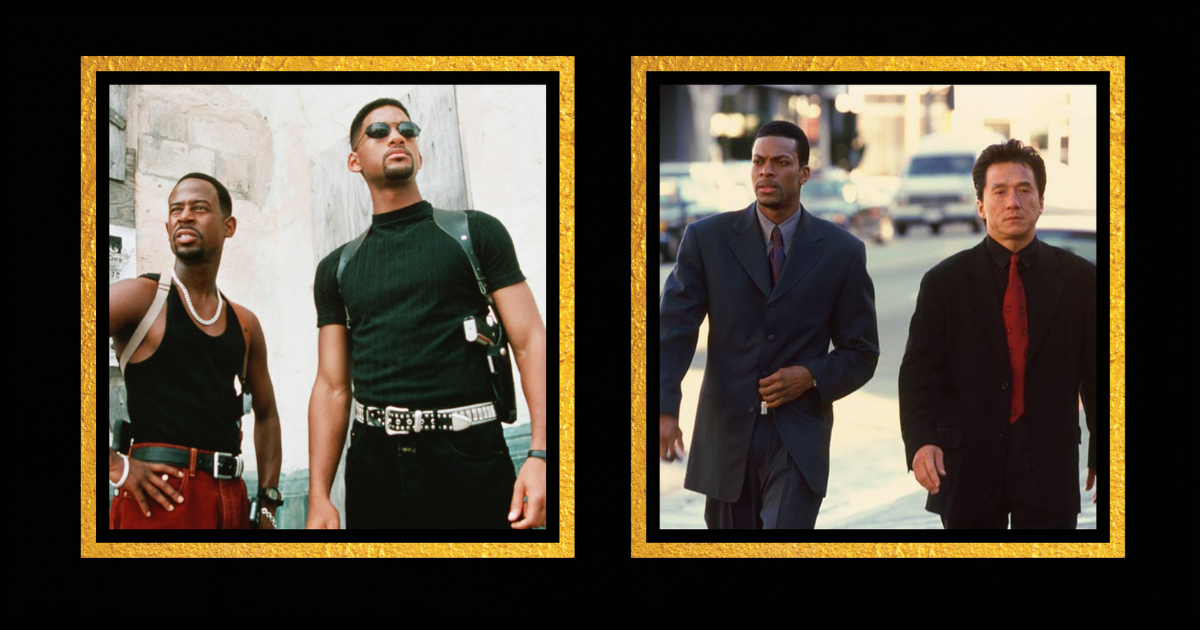
"Bad Boys" and "Rush Hour" & The Partnership Pivot
Powered by RedCircle
One is a playboy with a Porsche and a family fortune. The other is a family man with a minivan, a mortgage, and a bad attitude.
Or maybe it's a fast-talking LAPD detective paired with a disciplined inspector from Hong Kong who doesn't even speak the same corporate language.
I think you know what movies we're talking about today — but take a ride with me.
Picture this: your boss calls you into the office and says, "We just landed a massive account, but to execute it, I'm putting you on a team with the one person in the department whose way of working is the polar opposite of yours." They're all spreadsheets and silence, and you're all strategy and storytelling.
You don't always get to pick your co-founder or your project lead. Sometimes the firm just hands you a partner and tells you to bring back results.
In the 90s action classics Bad Boys and Rush Hour, we see what happens when you force two high-potential assets with completely different operating systems into one car. It's chaos, it's friction, and somehow it works.
Today I'm your partnership manager helping you audit your duo dynamic. We're diving into the Partnership Pivot — how to manage a high-stakes collaboration when you aren't on the same page, but you are on the same clock.
The Best Friends Myth
There's a common misconception in the startup and consulting world that you have to be best friends with your partner to succeed. That's great and all, but not really practical.
Look at Mike and Marcus in Bad Boys — they've been boys since the academy. They have that ride-or-die history. Then look at Lee and Carter in Rush Hour. They start as total strangers forced together by the FBI and the LAPD.
But here's the Suit reality: you don't have to start as best friends, and honestly, you don't even have to become best friends. This isn't a social club. It's a mission.
In high-stakes environments, the only thing that matters is goal alignment. If the goal is to recover $100 million in stolen assets — or hit a Q4 target — your personal feelings about your partner's attitude are secondary to the objective.
The question isn't: do I like you? The question is: can I trust you to cover my back when the market starts shooting?
The Audit: The Partnership Framework
- Mike and Marcus — The Legacy Loyalty: These two have institutional knowledge of each other. They know when the other is about to break, and their instincts are synced. If you have a long-term partner, use that history as a shortcut for communication — but don't let loyalty blind you to the fact that one of you may want to retire while the other still wants to stay in the field.
- Lee and Carter — The Operational Pivot: These two are a masterclass in complementary skill sets. Lee brings technical precision. Carter brings market intelligence, street talk, and memorable one-liners. They don't need to be identical. They need to be integrated.
- The Conflict Audit: Friction produces heat, and heat produces energy. It's not a physics class — just walk with me. When Lee and Carter argue, they are actually testing the strength of their strategy. If you and your partner agree on everything, one of you is redundant.
Focus on the "why," not the "who." Establish clear rules of engagement early. You don't need to share a beer after work, but you do need to share the same definition of success. If the mission succeeds, the partnership was a win — regardless of whether you're still best friends when it's all over.
The Crisis Pivot
There's a moment in Bad Boys where Mike and Marcus have to literally pretend to be each other to keep a witness safe. They're doing a full rebrand of their personalities under pressure — because Captain Howard has been screaming in their ears for the entire film. Warranted, but I digress.
In business, this happens during a crisis pivot. You might have to step into a role you hate just to save the company. The Suit — the role — might not fit, but the Screen — the goal — requires it.
If you're too proud to play the part for the sake of the mission, or too busy arguing with your partner to notice the witness is in danger, you aren't a partner. You're an ego with a business card.
The Suit Takeaway
You don't need to like your partner's car. You need to trust their driving.
Audit your duo, synchronize your vibe, and remember: the mission is bigger than the argument.
Post a comment