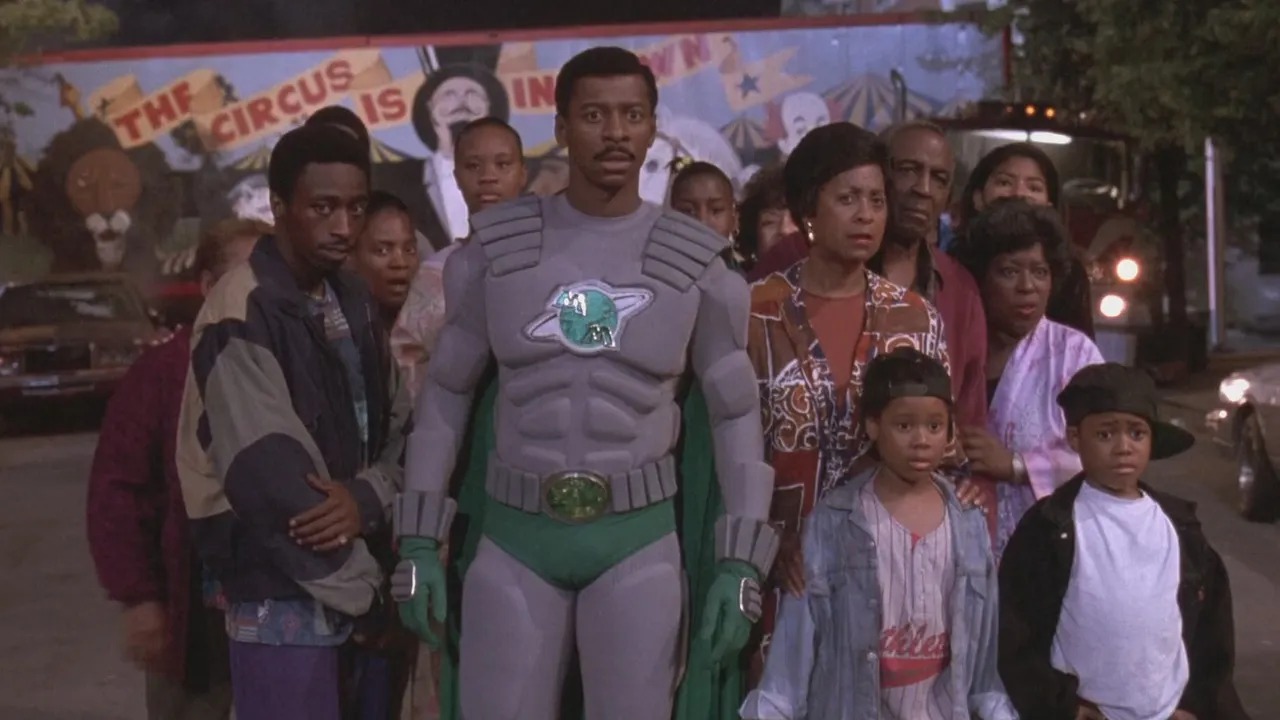
"The Meteor Man" & Grassroots Leadership
Building Brand Equity and Trust Without a Corporate Budget
Powered by RedCircle
We’ve spent the last few weeks talking about corporate giants and dinosaur-sized budgets.
But what happens when power isn’t handed to you by a CEO? What happens when it literally falls out of the sky and hits you in the chest?
In Robert Townsend’s 1993 classic, The Meteor Man, we’re introduced to Jefferson Reed — a mild-mannered schoolteacher who just wants to stay out of trouble. But after a run-in with a glowing green meteor, he suddenly has the stats of an S-Rank hero. He can fly, he can heal, and he can absorb the contents of a book just by touching it.
But here’s the thing: having the power to change things doesn’t mean you have the authority to lead.
The Industry Yap: The Hero Complex
In the business world, we see the “hero” executive all the time. That person who comes in with a big title and an even bigger ego, thinking they can fix a broken department in a weekend. They have the powers — the budget and the authority — but they don’t have the buy-in.
Jefferson Reed starts out terrified. He tries to hide his powers because he doesn’t want the responsibility. But in leadership, silence is a choice. If you see the Golden Lords — the toxic elements of your industry — destroying the culture, and you do nothing, you’re part of the problem.
But you also can’t just fly in and start barking orders.
You have to understand the neighborhood first.
So, are you trying to save your team from the top down, or are you building power from the ground up?
The Audit: The Community Buy-In Framework
Jefferson didn’t win by fighting the Golden Lords alone. He won by organizing the grandmas, the shop owners, and the kids. Now, you’re not fighting a gang where everyone wears black leather and sports blonde fades — still have no idea why we chose that, but I love this movie so I don’t ask questions.
Here’s how this translates to your world:
- Identifying the Stakeholders: In the movie, it was the seniors who had lived in the neighborhood for decades. In your company, who are the legacy employees who know where the bodies are buried? If you don’t have them on your side, you might as well pack it up.
- Resource Allocation (The “Book” Power): One of Jefferson’s coolest powers was touching a book and instantly knowing its contents. In business, this is market research. You cannot lead a community you haven’t studied.
- Visible vs. Invisible Impact: Flying around in a cape is front-end flash. But cleaning up the park, planting vegetables, and helping the neighbor fix their porch? That’s back-end stability. True leadership is about the small, consistent wins that prove you’re actually about that life.
- The Coalition of the Willing: Jefferson didn’t need a professional army. He needed neighborhood watch. Stop looking for perfect talent and start looking for aligned talent.
Grassroots leadership is about shared equity. If the community feels like they own a piece of the victory, they will help you defend it. If you do it all yourself, they’ll just watch you burn out.
The Fading Power
There’s a moment toward the end where Jefferson’s powers start to fade. He’s losing right when the final boss shows up.
This was the moment I threw my hands in the air and said aloud, “Now?!”
In your world, this is the Burnout Trap. If your entire strategy relies on your personal superpowers — your ability to work 80 hours a week or your specific genius — what happens when the meteor juice runs out?
Jefferson realized that the power wasn’t in his flight. It was in his ability to inspire the person standing next to him to pick up a brick or a beloved vinyl record.
Real power is transferable.
If your team can’t function when you’re human, you haven’t built a business — you’ve built a cult of personality.
The Suit Takeaway
You don’t need to fly to be a compelling leader. You just need to show up for the people you lead. Engage your stakeholders, share the credit, and build a system that outlasts your superpowers because at the end of the day, the suit only looks good if the neighborhood is thriving.
Post a comment